Quantum 1.0: foundations and first inventions
The first quantum revolution (Quantum 1.0) began in the early 20th century, when scientists realised that classical physics could not explain how light and atoms behave. Key figures included Max Planck, who proposed that energy is emitted in discrete packets called quanta, and Albert Einstein, who explained the photoelectric effect. Niels Bohr developed an early model of the atom, while Heisenberg and Schrödinger created the mathematical framework of quantum mechanics. Dirac later linked quantum theory with relativity.
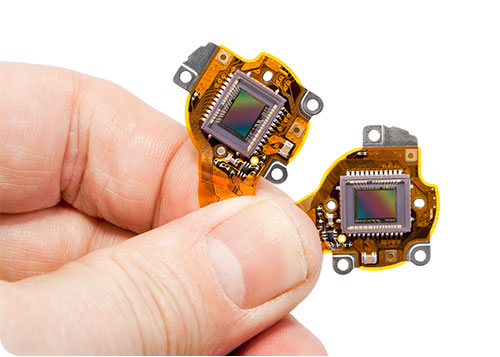
This new understanding of quantum behaviour led to major technologies. By studying how large numbers of electrons behave in materials, scientists were able to develop semiconductors and the transistor, which underpin modern electronics. Other important technologies include lasers and medical imaging methods such as MRI.
However, these technologies use very large numbers of particles acting together. They do not control or measure individual quantum particles, which is the focus of more recent quantum technologies.
Quantum 2.0: controlling individual quantum systems
The second quantum revolution (Quantum 2.0) began in the late 1990s. It marked a shift from simply observing quantum effects to actively controlling individual quantum systems. This became possible due to advances in experimental techniques such as laser cooling, ion trapping and nanotechnology. Scientists were able to isolate, control and measure single atoms, photons and electrons.

The aim of Quantum 2.0 is to make use of key quantum properties that were not fully exploited before: superposition and entanglement. Superposition means that a particle can exist in more than one state at the same time. Entanglement links particles so that measuring one affects the other, even when they are far apart.
By controlling these effects, scientists can develop new technologies such as quantum computers, secure communication systems and highly sensitive sensors.
Main areas of research and future outcomes
Today, Quantum 2.0 research covers several areas. Click on each section below to reveal more information.
Sensing and metrology
Learn how quantum sensing uses atoms and photons to make extremely sensitive measurements, enabling applications in navigation, medicine and detecting hidden structures.
Find out moreElectrical Metrology
Learn how quantum electrical metrology uses fundamental constants to measure current, voltage and resistance with high accuracy, supporting reliable standards across science and industry.
Find out moreCharacterisation and imaging of materials
Learn how advanced imaging and measurement techniques reveal the structure and properties of materials at the nanoscale, supporting new technologies in electronics, medicine and quantum research.
Find out moreCommunications and Networks
Learn how quantum communications use photons and qubits to enable secure data transfer, with applications in encryption, networking and the future quantum internet.
Find out moreComputing
Learn how quantum computers use qubits, superposition and entanglement to solve complex problems, and how measurement science supports reliable quantum technologies.
Find out morePositioning Navigation & Timing (PNT)
Learn how quantum positioning, navigation and timing uses atomic clocks and sensors to enable precise navigation without relying on satellite signals.
Find out moreCareers
Explore careers in quantum science at NPL, from school work experience and apprenticeships to internships, graduate roles and PhD opportunities in cutting-edge research.
Find out moreSummary
Quantum 2.0 is transitioning from theoretical physics labs into industrial engineering, promising to redefine computing, security, and sensing in the coming decades. The UK is a leading light in this technological revolution with NPL’s work on metrology utilising and underpinning many exciting advances.
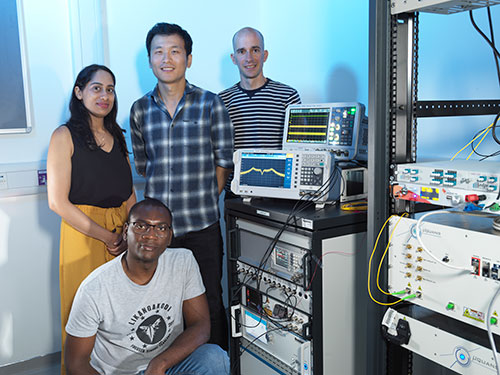
NPL has over 200 people working on quantum science.
Contact us
Our research and measurement solutions support innovation and product development. We work with companies to deliver business advantage and commercial success.
Contact our Customer Services team on +44 20 8943 7070