Quantum computing
How quantum computers process information
Classical computers process information using binary building blocks called bits as units of information. Quantum computers use a quantum version of these bits called qubits. Unlike classical bits, which can only exist as either a 0 or a 1 state, qubits can exist in both states at the same time. Furthermore, while the state of each classical bit is independent of each other, qubits can be entangled with one another, meaning that their state is connected and operations on one qubit affect the state of the other. These properties allow quantum computers to effectively process information in parallel and to do tasks that cannot be done on a classical computer.
Why is quantum computing important for the UK?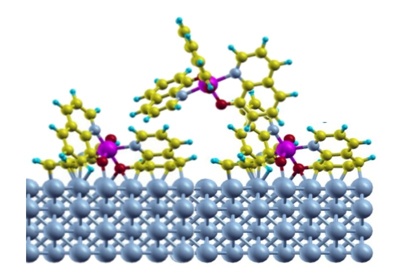
Quantum computing has the potential to transform areas such as materials science, chemistry, optimisation and secure communications, promising practical technological impact across many industrial sectors. To benefit from this technology, the UK needs powerful and reliable quantum computers. This is where national measurement science plays a critical role.
What challenges are holding quantum computing back?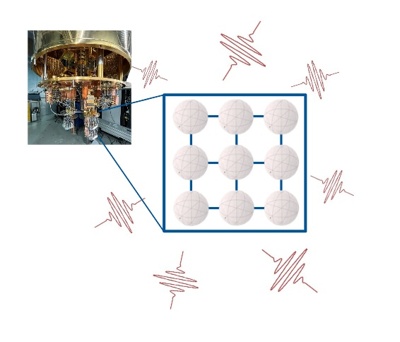
Quantum systems are extremely fragile. Their sensitivity to the surrounding environment means that even weak noise can introduce substantial errors. This makes protecting information far harder than in classical computing. While methods for quantum error correction exist, it comes at the cost of many additional qubits, compounding the already difficult task of scaling up quantum hardware. Furthermore, even with improved devices, there is the need to develop new algorithms that provide clear, practical advantages for practical applications over their classical counterparts.
What does NPL do in quantum computing?
The NPL supports quantum computing by developing the measurement science, standards and benchmarks needed to turn laboratory demonstrations into practical technologies. NPL helps ensure that quantum devices can be accurately tested, compared and improved, enabling industry and researchers to build systems that work reliably in the real world. NPL also works on the characterisation and modelling of noise sources in quantum computers and on the development of algorithms to take advantage of the computational capabilities offered by quantum computers.
How do we benchmark the performance of quantum computers?
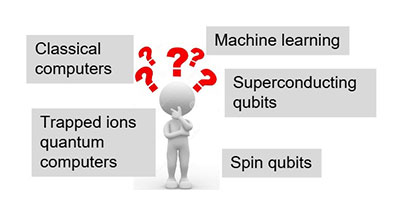
To progress quantum computing hardware and algorithms and achieve advantage, we need reliable and independent ways to assess their performance. NPL is developing such benchmarking methods and promoting international agreement and standardisation. These approaches include developing both classical and quantum computing algorithms for applications, and systematically comparing their performance as a benchmark. Building on machine learning and AI tools, NPL also develops accurate physical noise models to understand and mitigate the sources of noise in quantum computers.
Learn more
How do we reliably characterise superconducting qubits?
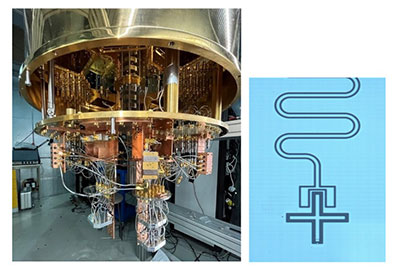
Superconducting qubits are one type of hardware implementation and operate at very low temperatures where metallic components become superconducting and have zero electrical resistance. Devices with hundreds of superconducting qubits can now be fabricated, but they still exhibit error rates that are too high for large-scale practical applications. At NPL, methods are developed to accurately characterise the sources of noise in superconducting qubits and to propose mitigation strategies.
How do we ensure the microwave signals at the qubits work as intended?
- Radio frequencies (RF) are essential to exploit quantum physics for real-world applications such as quantum computing.
- Quantum computers often include RF components operating close to absolute zero kelvin.
- To ensure reliable operation, it is necessary to measure their RF performance at temperatures as low as tens of milli-kelvin.
At NPL, work supports industry and academia to create new and improved RF devices and products for quantum computing by measuring them at low temperatures.
Learn more
Contact us
Our research and measurement solutions support innovation and product development. We work with companies to deliver business advantage and commercial success.
Contact our Customer Services team on +44 20 8943 7070