Anti-slavery and ethics policies
Anti-slavery policy
The National Physical Laboratory (NPL) is the United Kingdom's national standards laboratory, an internationally respected and independent centre of excellence in research. It is qualified to provide many scientific and technical measurement services because of the skills, experience and reputation of its professional staff and is engaged in the business of research and development and of providing training and consultancy services.
Modern slavery is a criminal offence under the Modern Slavery Act 2015 and a violation of fundamental human rights. It takes various forms, such as slavery, servitude, forced and compulsory labour and human trafficking, all of which have in common the deprivation of a person's liberty by another in order to exploit them for personal or commercial gain.
NPL has a zero-tolerance approach to modern slavery and we are committed to acting ethically and with integrity in all our business dealings and relationships and to implementing and enforcing effective measures to ensure modern slavery is not taking place anywhere in our own business or in any of our supply chains.
This policy applies to all persons working for us or on our behalf in any capacity, including employees at all levels, directors, officers, agency workers, seconded workers, students, volunteers, interns, agents, contractors, external consultants, third-party representatives and business partners.
Ethics policy
The National Physical Laboratory's management framework and scientific principles are based on rigour, respect and responsibility.
NPL will:
- Always work within sound scientific principles.
- Challenge our involvement in scientific work that raises ethical issues.
- Document our decision making.
NPL's scientific research is built on a foundation of trust and integrity and, as an organisation, we are committed to the highest standards of ethical and professional conduct. NPL's research is undertaken in accordance with the highest standards of research methodology.
NPL adheres to the Government Office for Science's Universal Ethical Code for Scientists.
This universal ethical code of the values and responsibilities of scientists, has three main aims:
- To encourage ethical research.
- To get scientists thinking about the implications and impacts of their work.
- To support communication between scientists and the public on complex and challenging issues.
NPL is committed to ensuring that there is no modern slavery or human trafficking in our supply chains or in any part of our business.
NPL Management Limited Slavery and Human Trafficking Statement 2025
Introduction
This statement has been published in accordance with the Modern Slavery Act 2015 (“the Act”) which requires organisations with an annual turnover above £36 million to publish an annual slavery and human trafficking statement. NPL’s annual turnover exceeds this threshold.
This statement sets out the steps taken by NPL during 2025 to prevent modern slavery and human trafficking in its business and supply chains.
Modern slavery is a criminal offence under the Modern Slavery Act 2015 and a violation of fundamental human rights. It takes various forms, such as slavery, servitude, forced and compulsory labour and human trafficking, all of which have in common the deprivation of a person's liberty by another in order to exploit them for personal or commercial gain.
NPL has a zero-tolerance approach to modern slavery, and we are committed to acting ethically and with integrity in all our business dealings and relationships and to implementing and enforcing effective measures to ensure modern slavery is not taking place anywhere in our own business or in any of our supply chains. This applies to all persons working for us or on our behalf in any capacity, including employees at all levels, directors, officers, agency workers, seconded workers, students, volunteers, interns, agents, contractors, external consultants, third-party representatives and business partners.
NPL's background
NPL is the United Kingdom's National Metrology Institute, an internationally respected and independent centre of excellence in research. It is qualified to provide many scientific and technical measurement services because of the skills, experience and reputation of its professional staff and is engaged in the business of research and development and of providing training and consultancy services.
As of 31 December 2025, NPL had 1,531 employees, working at six locations in the UK: in Teddington, Guildford, Cambridge, Solihull, Huddersfield and Glasgow.
Relevant policies
NPL operates the following policies to support its approach to the identification of modern slavery risks and steps to be taken to prevent slavery and human trafficking in its operations. All of NPLs policies and procedures are reviewed and updated regularly.
- Ethics Policy
- In addition, NPL adheres to the government Office for Science’s Universal Ethical Code for Scientists
- Anti-Slavery Policy
- Whistleblowing Policy
- Anti-Fraud Policy
- Code of Conduct
- Safeguarding Policy
- Responsible Procurement Statement
NPL’s supply chain and due diligence
NPL will not engage in business with any supplier or individual known to engage in practices which are in breach of the Act. NPL practices robust due diligence throughout the tender supplier selection process, including use of the UK Government Supplier Questionnaire (SQ) for all contracts valued over £100,000 which contains specific requirements related to the Act. NPL also uses supplier intelligence sources, such as CreditSafe, to ensure that all its suppliers are financially, ethically and legally sound, and Electronics Watch, which focuses on protecting the labour rights and safety of workers in global electronics supply chains. If a supplier is found to be in breach of the Act or found to have misled NPL during the tendering process, immediate steps will be taken to measure the impact of the breach, and, if necessary, terminate the contract.
NPL’s supply chain spend mainly falls under the following categories:
- Government and other Public Sector Bodies
- Professional Services
- Laboratory and associated equipment
- IT Hardware and Software
- FM Services and maintenance
- Travel
- Fleet
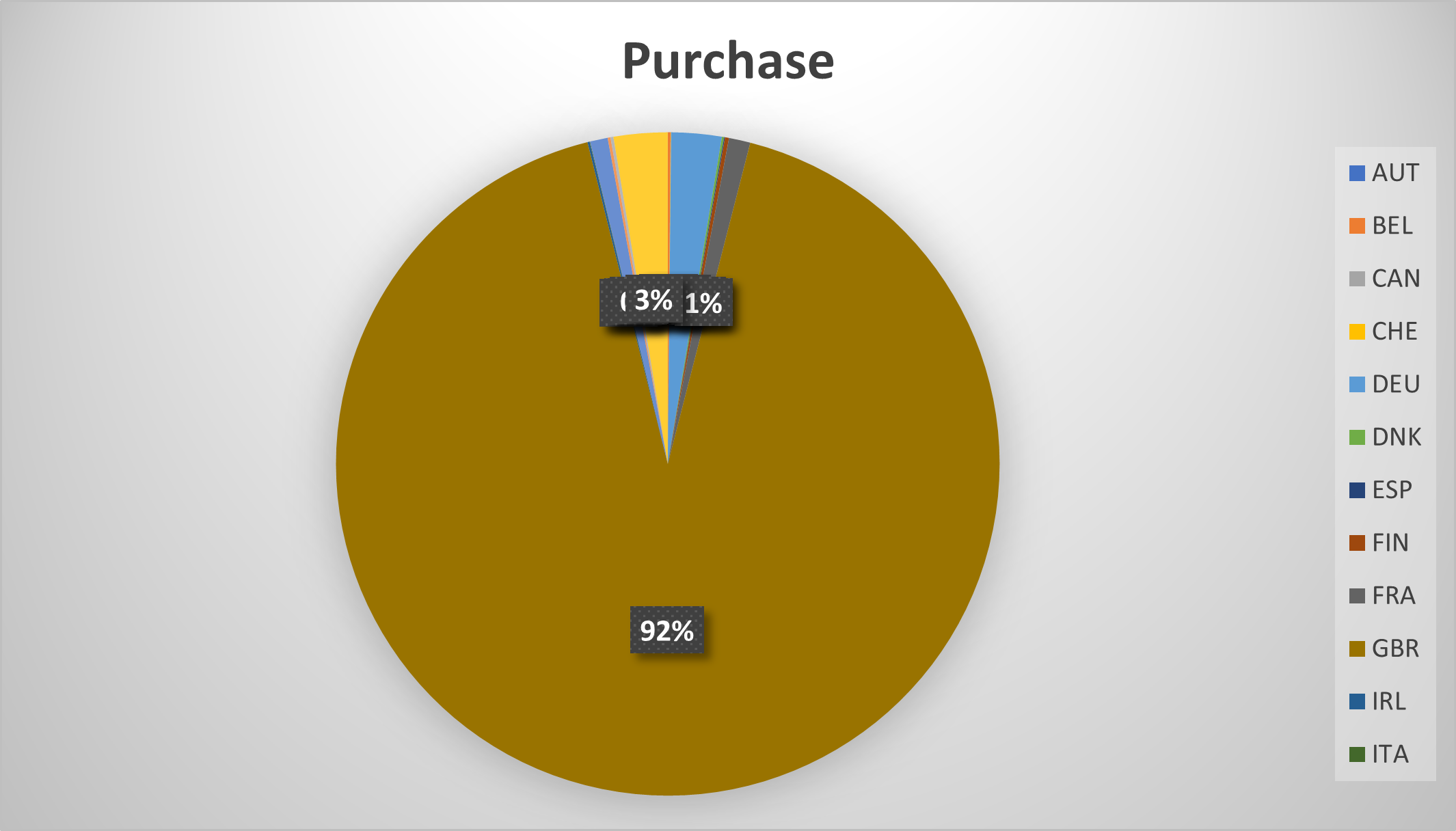
NPL’s supply chain is predominantly based in the UK, with 92% of spend procured from UK based suppliers during 2025, an increase of 8% from 84% in 2024, and, due to the types of products and services procured and the countries they are supplied from, the risk of modern slavery within our supply chain is considered low.
Wherever possible, and especially for the purchase of Professional Services, IT Equipment and Software procurement, NPL uses suppliers who have been appointed onto Frameworks with Crown Commercial Services (CCS), London Universities Procurement Consortium (LUPC) and Kent Commercial Services (KCS) and other Public Sector Consortium. These Frameworks carry out a robust Supplier Due Diligence process and integrate requirements on the topics of modern slavery and ethical procurement throughout the procurement processes from initial evaluation via Supplier Questionnaire (SQ), to tender drafting and evaluation, including using the government Modern Slavery Assessment Tool (MSAT), and during contract management.
Through its membership of LUPC, NPL is an affiliated member of Electronics Watch, the independent monitoring organisation which helps public sector entities to work together to meet their responsibility to protect the labour rights and safety of workers in global electronics supply chains.
Training in 2024
- HEPA Training in Guide to Modern Slavery and Protecting Human Rights in the Supply Chain
- CIPS (Chartered Institute of Procurement and Supply) ethics training
- Government Commercial College e-learning modules in Modern Slavery in the Supply Chain and Social Value e-Learning
Developments in 2025
During 2025:
- NPL continued to promote modern slavery e-Learning training;
- all persons working for NPL or on NPL’s behalf in any capacity undertook the Baseline Personnel Security Standard (BPSS) screening to offer a further level of assurance against potential forms of modern slavery; and
- when onboarding new suppliers in quarter 4 of 2025, suppliers have also been sent the “Sustain Supply Chain Code of Conduct”, which asks suppliers to commit to Responsible / Sustainable procurement within their organisations and to acknowledge their compliance with the principles of the Sustain Supply Chain Code of Conduct with respect to their organisation and their supply chains.
Next Steps
- All existing suppliers to be sent the “Sustain Supply Chain Code of Conduct” to complete.
- Above threshold tenders, where appropriate, will include weighted questions on traceability of materials and ethical sourcing within the supplier’s supply chain.
- Review and assure a sample of contracts let in the previous 12 months for modern slavery risk confirmation.
- Continue to complete modern slavery training sessions.
This statement is made pursuant to section 54 (1) of the Modern Slavery Act 2015 and constitutes NPL’s slavery and human trafficking statement for NPL’s financial year ending 31 December 2025.
Approved by the Board on 26 February 2026.
Signed by:
Penny Holt
Chief Financial Officer
NPL Management Limited
Date signed:
19 March 2026
Contact us
Our research and measurement solutions support innovation and product development. We work with companies to deliver business advantage and commercial success.
Contact our Customer Services team on +44 20 8943 7070