Advancing quantum algorithms through accurate simulation and modelling
We develop theory, algorithms, models, and open-source software to guide the development and benchmarking of emerging quantum technologies, with a particular focus on quantum computing.
We work with over 20 industry partners and leading academic initiatives like the UK QCi3 hub to turn research into practical solutions for quantum computing.
Our research is core part of NPL’s mission of providing assurance on emerging quantum technologies, supporting industry to bridge the gap between theoretical promise and practical application providing advantage for end users.
Our research focuses on four key areas:
Quantum algorithms
Developing algorithms that make quantum computing useful for large scale real-world problems like materials science, chemistry, and AI.
Error
reduction
Quantum error correction and theoretical models to understand and reduce errors in quantum hardware.
Scaling with
physics and AI
Combining machine learning, AI and physical models to scale up quantum technologies in a trustworthy way.
Performance benchmarks
Creating trustworthy quantum computing performance benchmarks for industry, customers, partners, and supply chain.
Our Quantum Software and Modelling team


.jpg?lang=en-US)
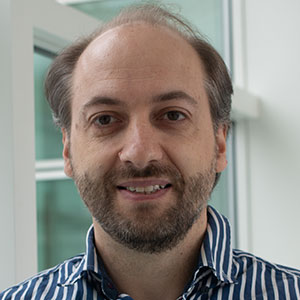



By modelling quantum systems and validating algorithms, we help unlock breakthroughs in secure communications, advanced computing, and next-generation materials — shaping a future where quantum innovation solves real-world challenges for industry and society.
Cyrus Larijani - Head of Quantum Strategy - NPL
Our recent publications
Classical and quantum computing algorithms to probe quantum advantage
- Anderson impurity solver integrating tensor network methods with quantum computing. APL Quantum 2, 016121 (2025)
- Interpolating numerically exact many-body wave functions for accelerated molecular dynamics. Nature Communications 16, 2005 (2025)
- Encoding optimization for quantum machine learning demonstrated on a superconducting transmon qutrit. Quantum Science and Technology 9 045037 (2024)
- The Variational Quantum Eigensolver: A review of methods and best practices. Physics Reports 986, 1-128 (2022)
Characterisation, mitigation, and correction of noise in quantum computers
- Modelling non-Markovian noise in driven superconducting qubits. Quantum Science and Technology 9 (3), 035017 (2024)
- Unified framework for open quantum dynamics with memory. Nature Communications 15, 8087 (2024)
- A fault-tolerant variational quantum algorithm with limited T-depth. Quantum Science and Technology 9 015015 (2023)
Trustworthy AI for Quantum Technologies
- Fast characterisation of multiplexed single-electron pumps with machine learning. Applied Physics Letters 125, 124001 (2024)
- Fast-tracking and disentangling of qubit noise fluctuations using minimal-data averaging and hierarchical discrete fluctuation auto-segmentation. arXiv:2505.23622
Performance benchmarks and metrics for quantum computers
- A Review and Collection of Metrics and Benchmarks for Quantum Computers: definitions, methodologies and software. arXiv:2502.06717
- Optimising the quantum/classical interface for efficiency and portability with a multi-level hardware abstraction layer for quantum computers EPJ Quantum Technology 10.1 (2023): 36.
- Classical simulations of noisy variational quantum circuits npj Quantum Information 11.1 (2025): 84.
Open software packages
We provide open-source tools to help researchers and industry test and improve quantum technologies:
QCMet
A benchmarking suite that makes it easy to measure and compare the performance of quantum computers
Read the paper: Review and Collection of Metrics and Benchmarks for Quantum Computers.
pyTTN
A simulation library for modelling quantum systems efficiently.
Contact us
For recruitment enquiries please email Ivan Rungger.
For press and media, please reach out to NPL Communications.