Skip to content
The National Physical Laboratory The National Physical Laboratory
Accessibility and language tools
  • Home
  • National Timing Centre (NTC)

National Timing Centre (NTC) programme

Resilient time for the future

Assured time and frequency for the UK

What is the National Timing Centre programme?

The National Timing Centre (NTC) is a major programme led by the National Physical Laboratory (NPL). NPL provides accurate, resilient and secure timing, traceable to the global time scale, Coordinated Universal Time (UTC). 

Through the NTC programme, NPL aims to provide the UK with a sovereign, resilient timing infrastructure that enables the delivery of highly accurate and dependable time to users. 

The programme will enable the UK to leverage a range of time and frequency distribution technologies including fibre, communication satellites, and terrestrial broadcasts, alongside Global Navigation Satellite Systems (GNSS). Timing will become more robust by having multiple complementary methods to deliver timing signals, alongside direct access to the national time scale, UTC(NPL) for traceability and assurance. 

Find out how the NTC can support your organisation

Contact us and stay updated

Hear about NTC and the future impact of time

Why resilient, traceable time matters to national infrastructure

Resilient, traceable time is the invisible utility behind modern life and increasingly a foundational dependency for industry.

It underpins national infrastructure - from telecoms and energy grids to data centres and financial trading - and enables future innovation in 5G/6G technologies, advanced manufacturing, and emerging digital applications driving industrial growth.

As the UK relies more on digital systems, resilient time becomes a matter of national confidence as well as technical performance.

What does the NTC deliver for industry?

NPL works actively with industry to provide expert insights, guidance and practical support. We deliver trusted national time that strengthens services and drives industrial innovation and economic growth. This new resilient infrastructure will future-proof services by ensuring organisations have continuous access to precise and reliable timing, traceable to UTC(NPL). As a world‑class capability will strengthen national resilience and secure long-term prosperity.  

From operational systems to the distribution of information we rely on every day, precise timing helps to keep services running smoothly and reliably, maintains operational continuity and builds trust. With fewer interruptions and improved performance, organisations can operate more efficiently, reducing the need for contingency planning and helping to deliver a consistent, high-quality experience for users. 

Access traceable time to support industry innovation and resilience

  • Innovation Nodes - three regional Time and Frequency Innovation Nodes were established at Cranfield University, University of Strathclyde and University of Surrey to offer access to traceable reference time signals from UTC(NPL). With cutting-edge facilities in monitored laboratory spaces, the Innovation Nodes support industry with research, development and practical implementation in high-accuracy and resilient timing applications.
  • NPL distributes accurate time and frequency across the UK via MSF radio time signal and NPL’s Network Time Protocol (NTP) servers, as well as a NPLTime®, a GNSS-independent timing service delivered over fibre optic networks, strengthens resilience across systems.
 
Read the latest NTC news
1
Discover the importance of precise time

We are awoken in the morning by the alarms on our smartphones, synchronised to our wake-up times by a network of satellites overhead. This same technology tracks our location on our morning runs and commutes. We boil the kettle to make a cup of tea with electricity from the grid – which is itself synchronised by satellite-based timing. On the platform at the train station, we see on the overhead signs that the train is delayed by one minute, which we know thanks to coordination of its GPS location with the local station.

Why is time important to our digital infrastructure?

Unknowingly we reap the benefits of technologies that can precisely detect time and location every single day. Even just on our smartphones, we have a direct line to this invisible yet integral utility that underpins much of the infrastructure and systems that keep the world turning. It has been estimated that satellite-based positioning, navigation and timing services – the global navigation satellite systems (GNSS), such as GPS – directly support over £250 billion (13.4%) of the UK economy. As a result, it is important for industries to explore additional timing solutions that offer greater resilience, enhance performance and support continued innovation and future growth. 

How is NPL supporting industry to be future ready with accurate time?

Through the National Timing Centre (NTC) programme, NPL is developing a complementary solution for future timing, which will support many aspects of UK industry and society, which increasingly require precise time - whether it’s at home on our devices, the telecoms networks, energy, broadcast or in the finance sector, where the time margins used are incredibly fine: one second for voice trading, one millisecond for electronic trading, and just 100 microseconds for high-frequency trading. 

A resilient and accurate timekeeping source will ensure such services benefit from access to secure, synchronised timing signals, that are traceable to the national time scale - UTC(NPL). It will ensure the continued stability of important services we rely on, should something occur to the signals received via satellites, and will future proof society as we develop smart cities, autonomous vehicles and advanced communications. 

Accurate and resilient time will ensure the continued stability of important services we rely on, such as our financial systems, power grids, communications and transport services, to keep the UK moving and strengthen confidence in their reliability. 

The NTC programme will ensure split-second timing is available wherever it’s needed across industry. It will provide the resilience needed to support our digital infrastructure, wider economy and society to keep essential services running and ensure trust in new technologies. 

Time and synchronisation skills and training

However, in order for the programme to achieve its aims of improving resilience to strengthen our society, we need to ensure we have the skills and workforce to implement such infrastructure. The programme is responding to the specialist skills shortage in time and synchronisation solutions through specialist, apprentice and post graduate training opportunities.

NPL offers several time and frequency courses including an Introduction to Time and Frequency Measurement and an Introduction to Clock Performance course. Both are one day, online courses, offered at no charge, which aim to equip the next generation of specialists. They are suitable for anyone interested in the subject, from students and entry-level scientists and engineers to professions in many different industry sectors for which time and frequency play a role.

These NPL certified courses have been developed through the NTC programme in partnership with the NPL Quantum Programme. They will help people to build skills in time and frequency to support the maintenance and innovation required for many sectors of society to function properly.

Ensuring we have a large number bank of specialists, trained and qualified in this area, will support the NTC programme in its ambitions to enable innovation and the acceleration of new technologies, such as smart grids, 5G, factories of the future and smart cities.

Read the blog: Leon Lobo, Head of the National Timing Centre, discusses the importance of resilient timing

Read more about NTC and our timing infrastructure

The following information provides an overview of the planned capability being developed as part of the NTC programme, to support access of resilient and traceable time across the UK. 

Developing framework within the NTC programme 

NPL is defining potential frameworks to enable future access of resilient and traceable time and frequency signals, that support long-term scalability. The following points provide further information about the services we offer:

What are NPL's innovation nodes and where are they located?

Through the NTC research and development programme, NPL has established three timing innovation nodes at partner universities across the UK, including the University of Surrey, University of Strathclyde and Cranfield University. The nodes provide industry and academia with access to timing signals, traceable to UTC(NPL), for research, testing and product evaluation, which support the innovation of time-dependent products and services. The universities offer cutting-edge facilities with 24/7 monitored laboratory space. 

What are NPL’s service nodes? 

NPL operates two service nodes located at the Daisy (Reading) and Telehouse (London) data centres, which provide continuous, assured timing signals over dedicated fibre optic cables that are traceable to UTC(NPL) and independent of GNSS. These are currently used primarily for the distribution of the NPLTime® service to the financial sector and provide an opportunity for users from other sectors to partner directly with NPL to access the timing signal for their own timing needs or to offer assured timing services to their customers. NPL is working with government and industry to understand requirements and develop proposals which prioritise accessibility for service providers and users to UTC(NPL).  

In future, there could be the opportunity for industry to host and manage innovation and service nodes to meet R&D or market needs.  

Timing signal access options

NPL is currently developing plans to enhance the timing infrastructure across the UK. The ambition is to deliver a robust and accurate timing network to industry through a range of services, including access to the innovation and service nodes. The current and planned future signal access levels being developed are: 

  • free services: comprising as a minimum the MSF radio signal and network time protocol (NTP) servers
  • low-cost signal access hand-off points for onward use and distribution by service providers where cost, scale and assurance level will be based on industry demand and requirements 
  • high-end, integrated capability at a higher cost 

Future timing opportunities

Future business models will give the opportunity for industry to scale to meet market needs. 

NPL welcomes ongoing information about industry requirements for using and accessing signals and facilities. Any new capability to be developed must be based on evidence of need. We would also welcome discussion with government, industry, and academia about the potential to establish innovation or service nodes managed by other organisations to provide downstream access to signals traceable to UTC(NPL). 

Please contact us regarding the NTC programme and complete the form with your enquiry

Contact the NTC team


NTC R&D programme report

This report outlines the programme’s purpose and achievements during the research and development phase (2019 to 2025), focusing on timing resilience, innovation and skills to support industry.

Download the full NTC report


Resilient Time Dissemination report

During the R&D phase, NPL and UKRI supported London Economics to produce a report examining the UK timing market, industry use cases reliant on accurate, synchronised time, and dissemination opportunities in the UK and internationally. It highlights market readiness and insights across sectors including communications, energy and finance.

Download the Resilient Time Dissemination report

Time and frequency training courses

Build your knowledge of time and frequency measurement with NPL’s two single-day e-learning courses offered at no charge. They cover the scientific concept of time and how it is measured and disseminated, overview of clock performance measures, statistics and data sheets, including principles of measuring time and frequency.

Introduction to Time and Frequency Measurement course

Introduction to Clock Performance course

NPL time and frequency products and services

How does the UK keep accurate time?

We deliver trusted time to customers and partners and offer a range of synchronisation standards and services, including access to our Network Time Protocol internet service at no charge.

Discover our time and frequency services

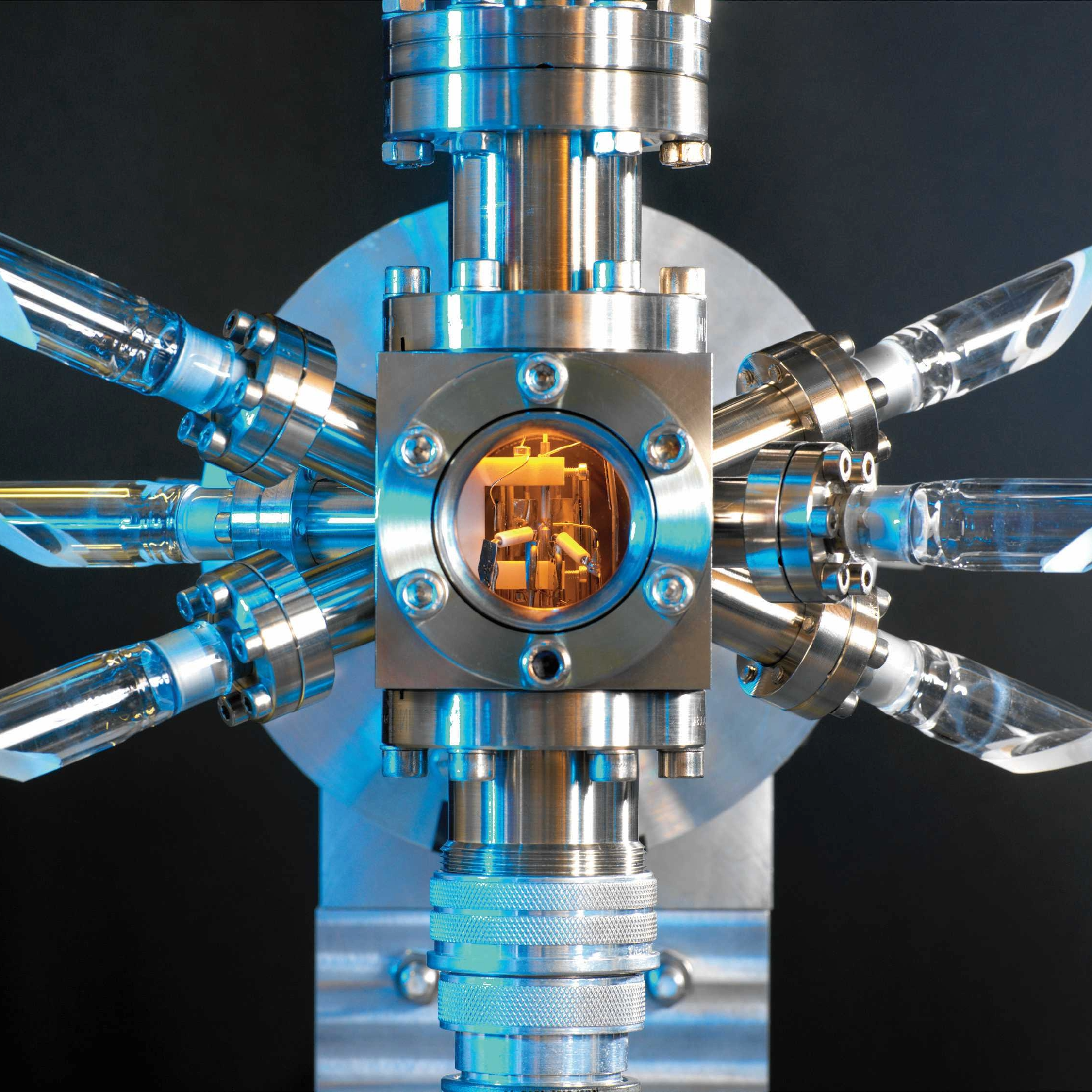
NPL develops next-generation atomic clocks

From keeping the UK 'on time' to developing new technologies that could lead to a redefinition of the second, we advance research in time and frequency measurement.

Discover our time and frequency research

Contact us and register to stay updated

Please tick the box above if you would like to receive future communications from NPL about our timing related services, news and events.

To find out how we use and manage your data please read our privacy notice