Recovery of the MarONet buoy and life in Perth
Blog three: Josh Schofield shares his experience of the Kamal Hossain Secondment Award.
4 minute read
I’m Josh Schofield, a Higher Engineer in the Optical Radiometric Metrology at NPL. I’m currently on secondment as part of my Kamal Hossain Secondment Award, with the Satellite and Remote Sensing Research Group at Curtin University in Perth Australia. If you missed my previous blog you can catch up here.
Just before Christmas came the most significant event of my secondment: a recovery of a MarONet buoy, which had been in the water for approximately a year. This was a substantial operation, requiring careful planning. The buoy was first towed around 20km at slow speed into the lee of nearby Rottnest Island to provide shelter from open ocean conditions, before it was prepared by divers for lifting. A barge fitted with two cranes then lifted the buoy from the water into custom transport cradles secured to the ships deck, before the vessel returned to Fremantle harbour. From there, the buoy was carefully loaded onto a flatbed truck and slowly driven back to the lab, where the team eagerly awaited its return.
The fact that the entire operation went to plan without hiccup and without compromising instrument performance was a testament to the experience of the MarONet team.
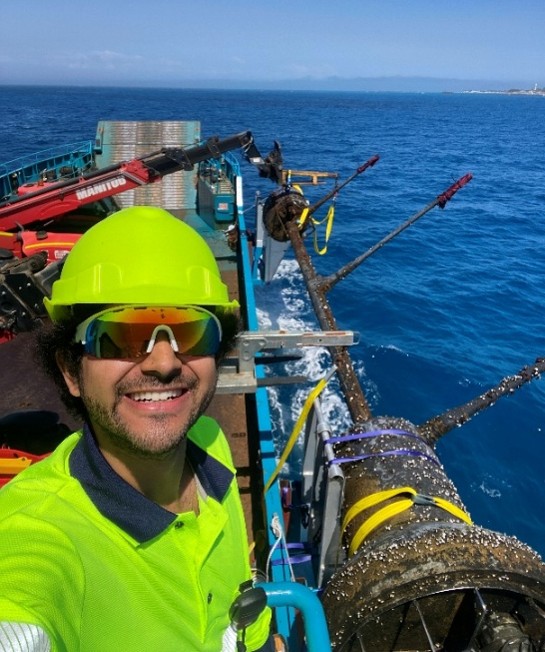 Image left: MarONet buoy secured and on route back to Fremantle harbour.
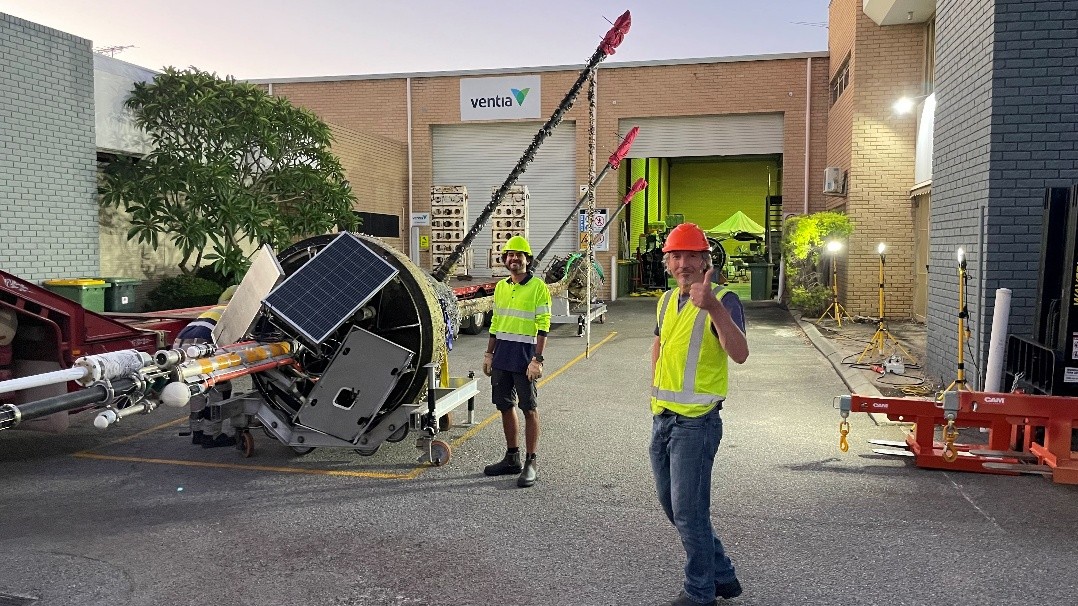 Image right: Prof. Antoine and I after MarONet had safely made its way back home to the lab.
January was spent on the post-deployment calibration campaign, gathering the data needed to reconcile instrument performance before, during and after deployment, so that the in-water data record can be treated as a continuous, reliable reference by satellite mission operators. This also gave the team the opportunity to begin cleaning and servicing the buoy, accessing areas not reachable during maintenance dives, identifying areas of biofouling or wear that would be of concern for future deployments. Preparations are now underway for the deployment of the newly calibrated instrument, which will continue the MarONet time series.
Rottnest Island
Alongside the lab work, I also got the opportunity to assist with servicing of a CIMEL sun photometer, which provides data for atmospheric modelling as part of the global AERONET program. The CIMEL instrument is located on Rottnest Island to be as close as possible to MarONet, taking automated measurements of atmospheric aerosols to give a representative picture of atmospheric composition during satellite overpasses.
Rottnest Island (known as Wadjemup to the Whadjuk Noongar people) lies offshore from Perth and is accessible only by ferry. The island is largely vehicle-free, meaning servicing involves a 30km round trip by bike. The CIMEL instrument is located on the far western tip of the island, passing some of the best beaches in Western Australia along the way.
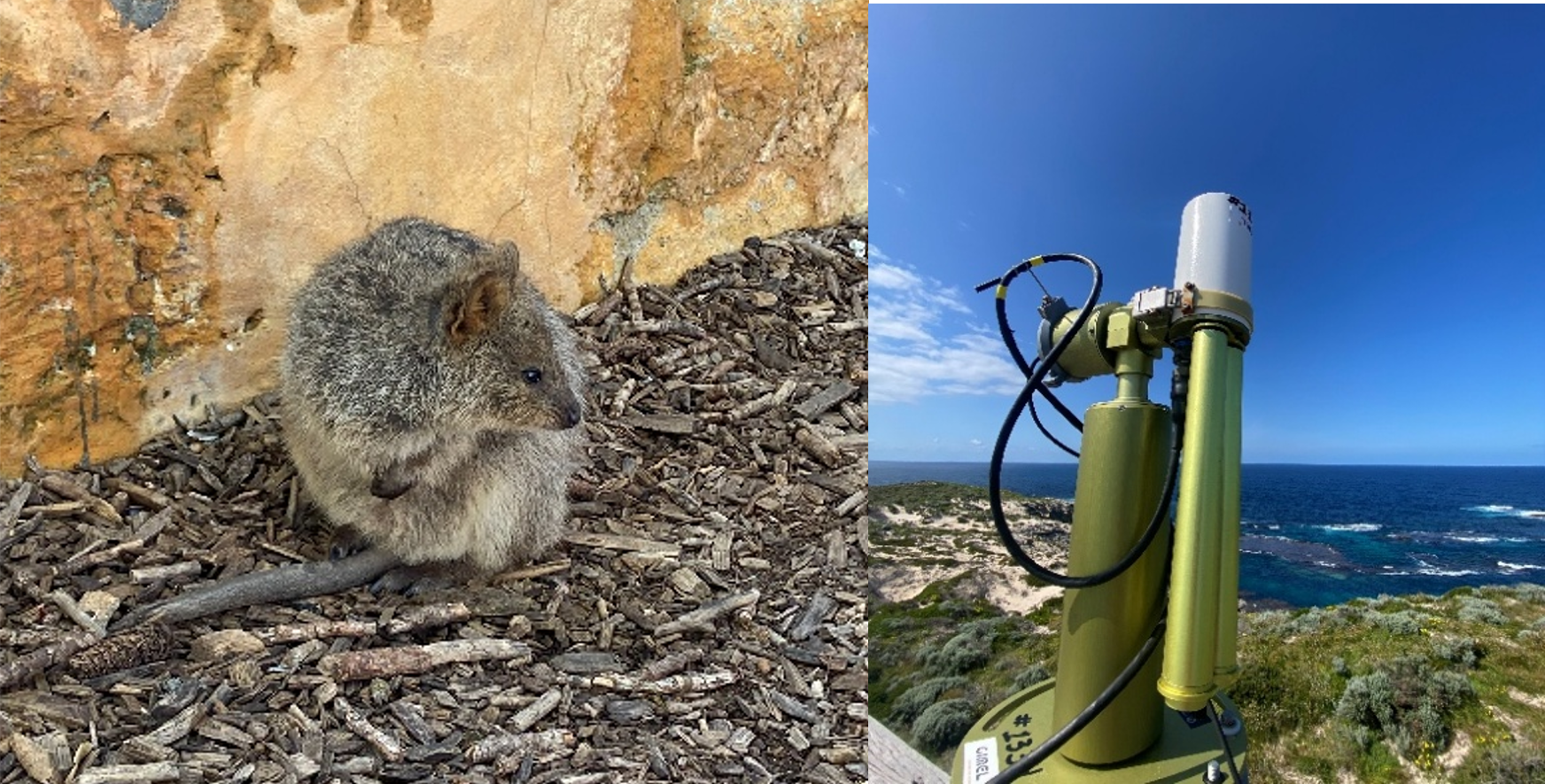 Image left: A quokka on Rottnest Island, and the CIMEL sun photometer located ~20 km from MarONet
Life in Perth
Of course, an international secondment is not only about the work. The Curtin University campus is large, vibrant, has excellent facilities, and with the bonus of being in one of the sunniest cities in the world. Perth has also been a fantastic base to explore the city's beaches and the Perth Hills. I managed to fit in a few typically Australian experiences, including weekend volunteering at a local wildlife park and, in November, I was at Perth Stadium to watch the first Ashes Test, which will be remembered for all the wrong reasons as an England fan.
There's a lot still to come in my secondment. The deployment of the new MarONet instrument is approaching, and there is an exciting possibility of a visit to the Marine Optical Buoy (MOBY) team in Hawai’i. Stay tuned for the next blog!
12 Aug 2026