Hawai'i and the Marine Optical Buoy
Josh Schofield shares his experience of Kamal Hossain Secondment Award.
5 minute read
I’m Josh Schofield, a Higher Engineer in the Optical Radiometric Metrology group at NPL. I’m currently on an international secondment as the recipient of the Kamal Hossain Secondment Award. If you missed my previous blogs, you can catch up here.
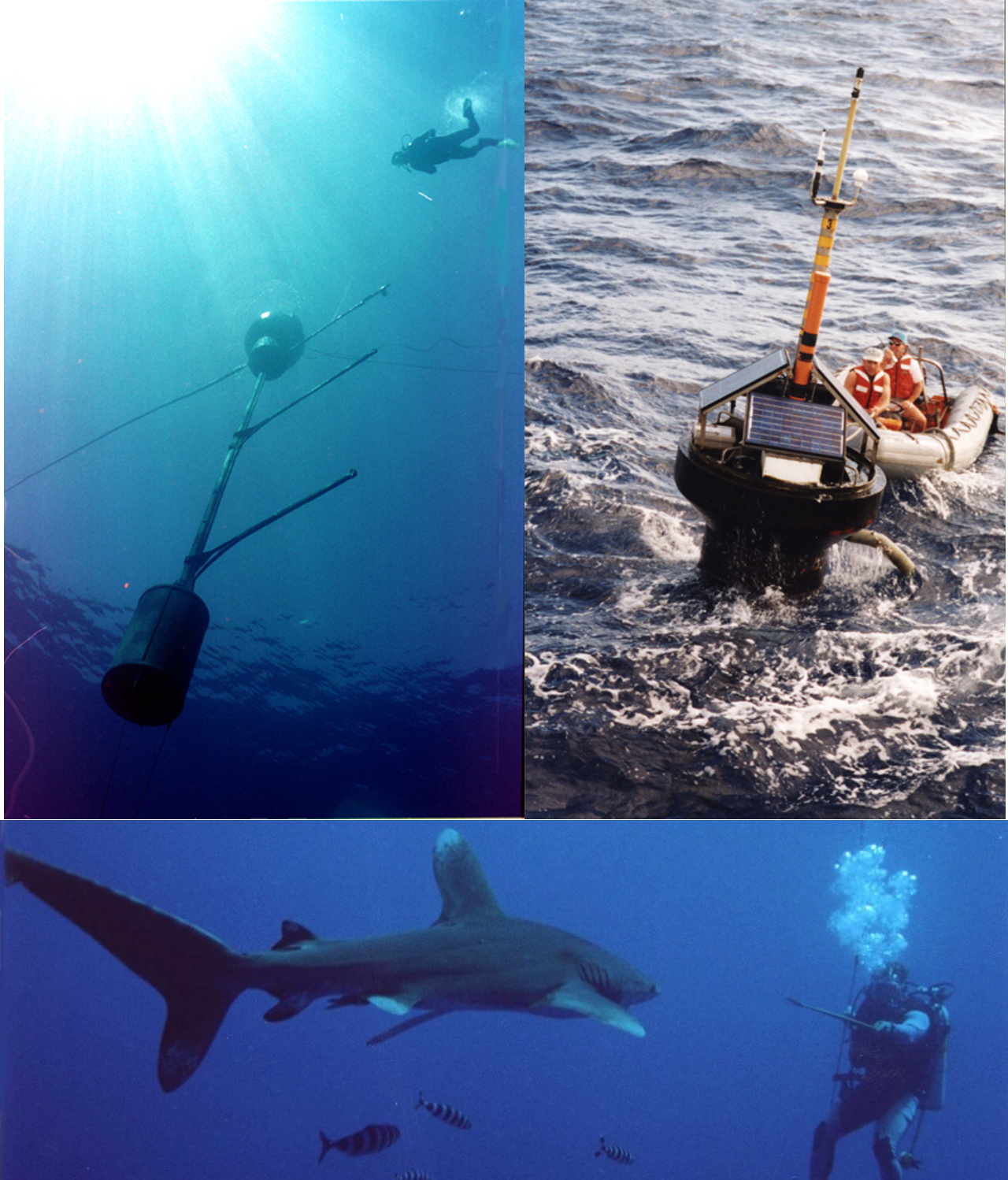 I’ve been fortunate to be able to extend my secondment time and spend a little over a month working with the Marine Optical Buoy (MOBY) team in Honolulu, Hawai'i.
MOBY is the world's longest-running in-situ reference for the vicarious calibration of satellite ocean colour sensors. It has been deployed off the coast of the Hawaiian island of Lāna'i and in continuous operation for almost 30 years. MOBY is funded by the U.S. National Oceanic and Atmospheric Administration (NOAA), and it is operated collaboratively between Moss Landing Marine Laboratories - San José State University, the University of Miami, and the National Institute of Standards and Technology (NIST). The MOBY team is based at the University of Hawai'i Marine Centre on the island of O'ahu, with close proximity to harbour facilities, research vessels and marine engineering resources.
The MOBY deployment site off the island of Lāna'i is chosen for its year-round clear, stable and optically uniform waters, a product of low biological productivity and significant water depth, making it a reliable and well-characterised calibration target from space. Although biological productivity is low, the site is far from lifeless, with oceanic whitetip sharks and other large deepwater fish species frequently observed during site visits.
My trip was timed to coincide with preparation and calibration activities for a new buoy system ahead of deployment. During this period, while carrying out calibrations, a potential route for moisture ingress into the optical path was identified. This led to re-making optical fibres, reassembly of MOBY, sealing of housings, and re-characterisation of the optical system to verify calibration stability and agreement with previous instrument behaviour. 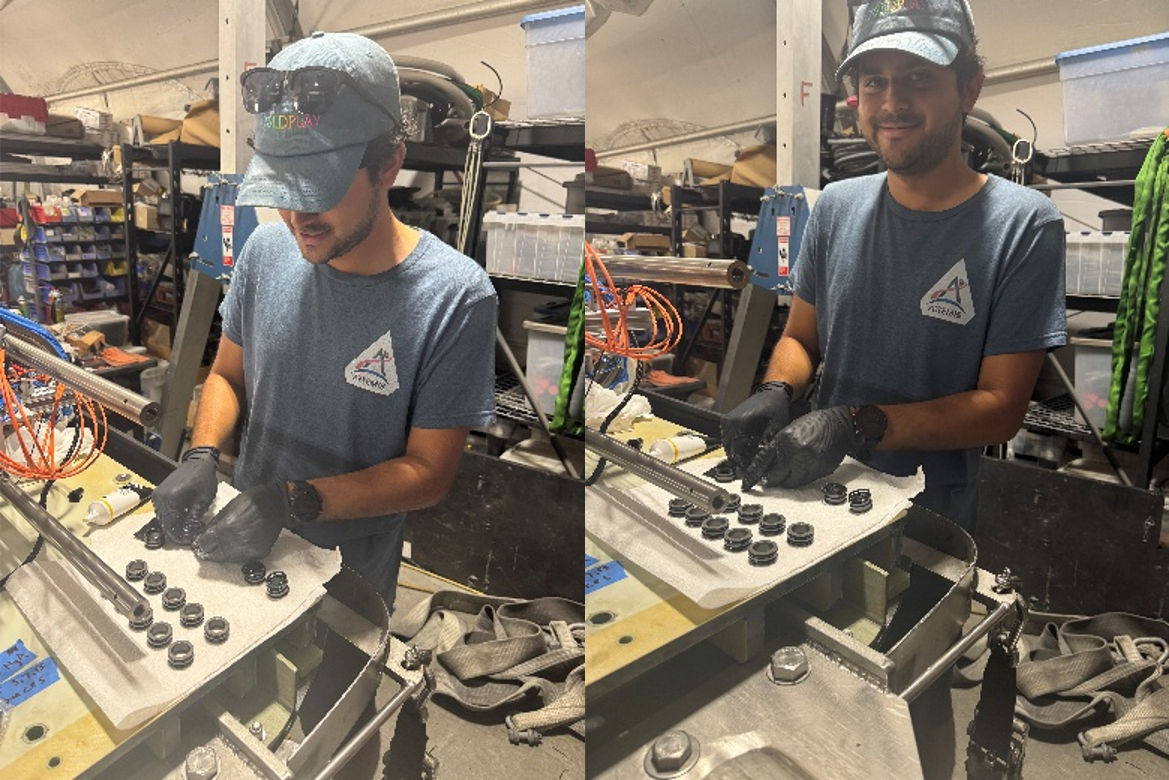
The work was emblematic of what it takes to keep a system like this functioning. MOBY (and MarONet) is a highly sensitive, well-characterised instrument, which is also required to operate autonomously in the open ocean for lengthy periods, meaning the engineering demands to minimise failures and reduce measurement uncertainties are significant. A further challenge is the practical reality of maintaining an instrument whose service life extends well beyond that of standard off-the-shelf components and suppliers. These are the kind of challenges the MOBY team have navigated successfully through accumulated experience and adaptability over nearly three decades.
The MOBY team were so generous with their time and knowledge throughout and I am very appreciative for the welcome and Hawaiian hospitality. The visit covered an enormous range, from physical oceanography through to fibre optic assembly and calibration considerations. 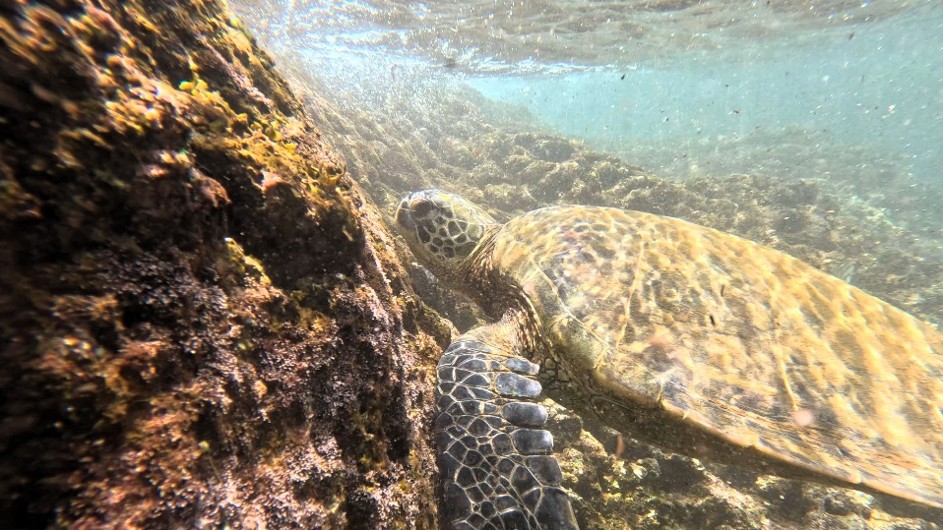 All of which I hope to be able to draw on in future, whether that is providing metrology support to systems like these, progressing my own research using MOBY data, or deepening my understanding of ocean optics and marine engineering.
After my time with the MOBY team I had a few days to explore Hawai’i, which included celebrating my birthday, a few spectacular wildlife encounters and a sunset from 3000 m!
With the end of this visit to MOBY, I’ll be returning to the MarONet team in Perth, Australia for a further round of calibration measurements before my secondment draws to a close. Stay tuned for what’s next and closing thoughts!
Image captions:
Image one: Top left, the full MOBY system underwater with a servicing diver. Top right, above surface segment of MOBY. Bottom, a servicing diver encounters an oceanic white-tip shark. Photos: San José State University.
Image two: Myself cleaning and regreasing o‑ring seals during instrument reassembly of MOBY.
27 Oct 2026